



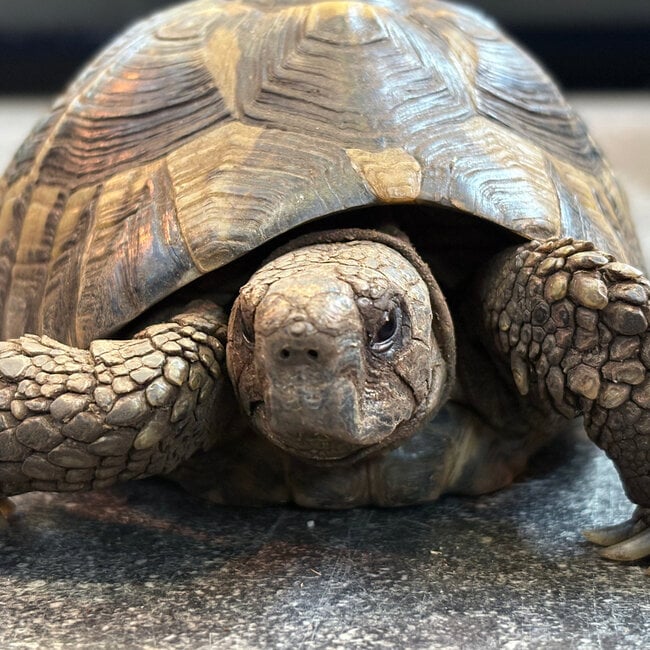
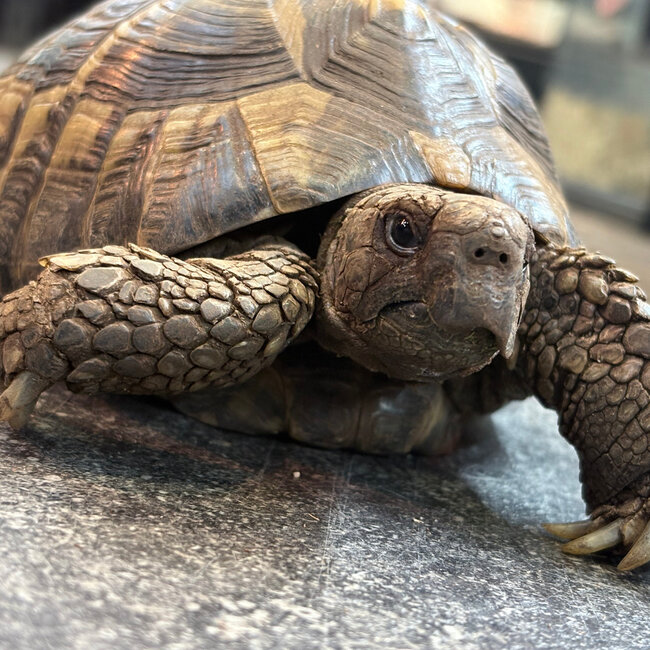
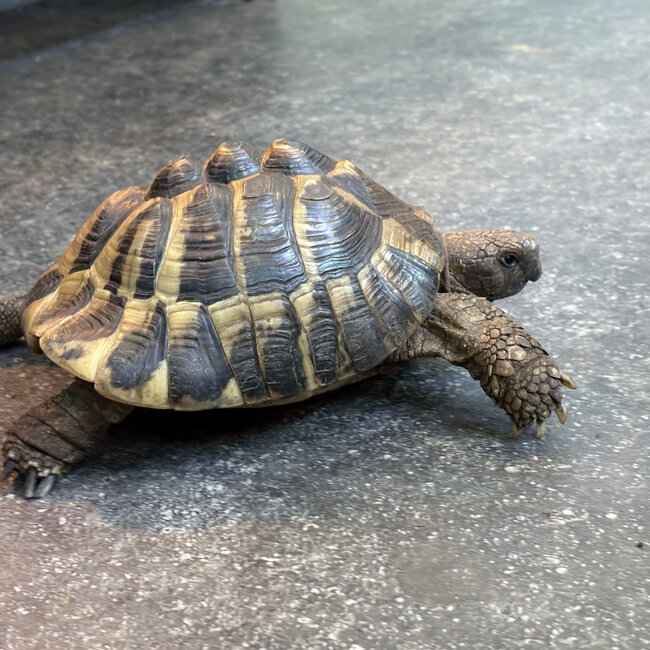
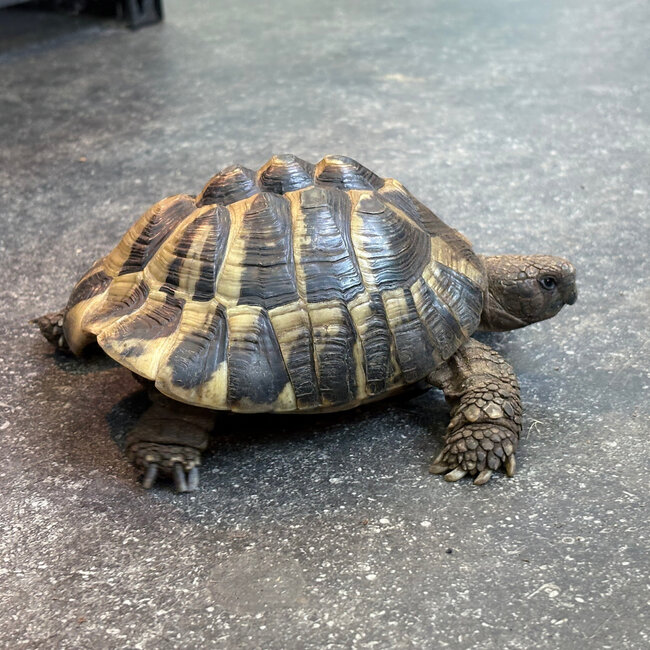
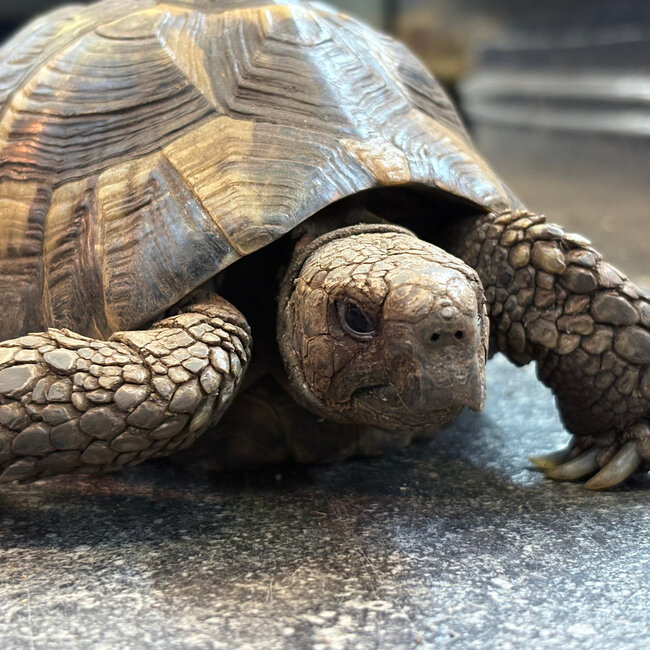
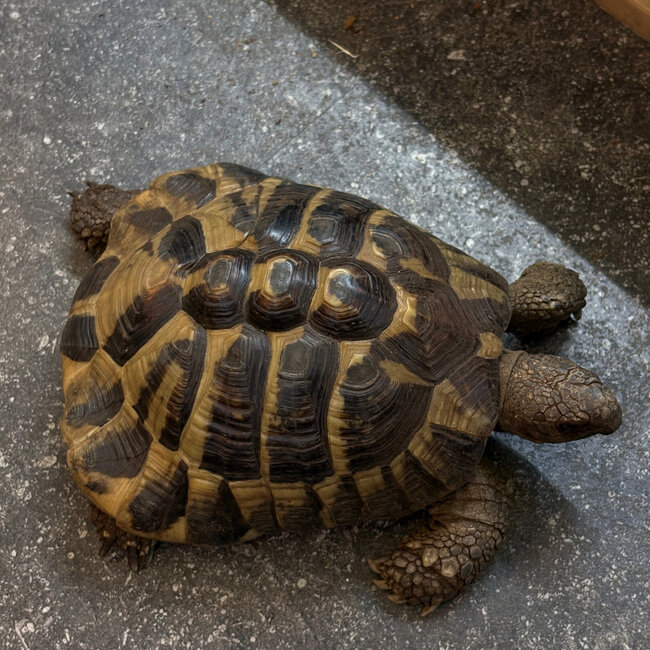
Hermann's Tortoise 'Ducky' SP
Meet Ducky! Part of our Surrender Program, she is a 15 year old Eastern Hermann's Tortoise looking for her new forever home. She is very friendly, curious and active. Read more..
Live Arrival Guaranteed. See terms for full details
We guarantee all the safe arrival of your new pet. See FAQ for full details.Local Delivery or Same Day Pickup
Pick up in store or check out with local deliveryCanada Wide Shipping
Overnight shipping for all live animalsEdmonton's Largest Selection
We are Edmonton's only reptile specialty store with the largest selection of live reptiles!
Product description
HERMANN’S TORTOISE
QUICK CARE GUIDE
Testudo hermanni
Hermann’s Tortoises are active, curious Mediterranean tortoises that thrive with space, strong UVB, a proper basking area, deep substrate, and a high-fibre diet.
ENCLOSURE
Minimum indoor enclosure: 4 × 2 ft for one adult
Larger is strongly recommended. Outdoor housing is ideal when weather permits.
Create a naturalistic setup with:
- Deep, dry soil-based substrate for digging
- Multiple hides and shaded areas
- Sturdy rocks and logs
- Safe live plants and edible vegetation
- A shallow water dish
Bigger is better! Hermann’s Tortoises are active animals that benefit from plenty of room to explore and graze.
TEMPERATURE
Provide a temperature gradient so your tortoise can move between warm and cool areas.
| Area | Temperature |
|---|---|
| Basking Spot | 95–100°F (35–38°C) |
| Daytime Ambient | 80–88°F (27–31°C) |
| Night | 65–72°F (18–22°C) |
Always provide a cooler, shaded retreat away from the basking area.
Tip: Use digital thermometers and/or an infrared temperature gun to verify actual temperatures.
UVB & LIGHTING
Provide a high-quality linear UVB fixture producing approximately 6-12-% UVB based off distance to shell.
- Run lighting approximately 10–12 hours daily
- Position UVB over the basking area
- Replace the UVB bulb according to the manufacturer's recommended schedule
- UVB should not pass through glass or plastic
- Always provide shaded areas where your tortoise can escape the light
Proper UVB is essential for healthy bones, shell development, and calcium metabolism.
DIET
Hermann’s Tortoises are herbivores and should receive a high-fibre, low-protein diet.
Great Choices
Dandelion
Clover
Grasses
Plantain weeds
Hibiscus leaves
Endive & escarole
Appropriate dark leafy greens
Hibiscus & pesticide-free rose petals
Repashy Grassland Grazer
Arcadia Optimised52 Tortoise diet, dried flowers
Mazuri Tortoise diet
Offer variety rather than relying on a single food.
Avoid
- Fruit as a regular food
- Meat or animal protein
- Dog or cat food
- Bread or processed foods
- High-protein diets
- Sugary foods
- Pesticide/herbicide-treated plants
The goal is a diet that closely resembles the fibrous weeds and grasses they naturally consume.
WATER & HYDRATION
Provide fresh, clean water at all times in a shallow, sturdy dish.
The dish should be easy to enter and exit and shallow enough to prevent drowning.
Young tortoises also benefit from occasional supervised shallow lukewarm soaks, particularly if they are not drinking reliably.
HUMIDITY & SUBSTRATE
General humidity: approximately 30–50%
Keep the enclosure well ventilated and the surface of the substrate relatively dry.
Use a deep, soil-based substrate that allows natural digging and burrowing.
Avoid:
Cedar or pine shavings
Fertilized potting soil
Clumping litter
Artificially scented substrates
Constantly wet conditions
HANDLING & BEHAVIOUR
Hermann’s Tortoises are naturally active and curious.
Normal behaviours include:
- Basking
- Grazing
- Digging
- Exploring
- Hiding
- Moving between warm and cool areas
Handle only when necessary and always support the entire body.
Let them explore! A naturalistic enclosure with plenty of room and enrichment is far more beneficial than frequent handling.
WATCH FOR
Contact a qualified reptile/exotic veterinarian if you notice:
- Persistent lack of appetite
- Unusual or prolonged lethargy
- Nasal discharge
- Wheezing or difficulty breathing
- Swollen or closed eyes
- Significant weight loss
- Soft or abnormal shell
- Difficulty walking
Never attempt brumation with a sick, underweight, dehydrated, or otherwise unsuitable tortoise.
THE HERMANN’S TORTOISE CHECKLIST
✓ Deep substrate
✓ Lots of space
✓ 95–105°F basking spot
✓ 80–88°F daytime ambient
✓ 65–72°F nighttime temperature
✓ 12% UVB (based off distance to shell)
✓ 10–12 hours of light
✓ High-fibre weeds & grasses
✓ Fresh water
✓ Dry, well-ventilated enclosure
✓ Hides, shade & natural enrichment
A happy Hermann’s Tortoise should have choices:
Bask • Cool Down • Hide • Dig • Graze • Explore
ROONAMI REPTILES
Natural care. Healthy animals. Better habitats.
This guide provides general husbandry information and is not a substitute for veterinary care. If you have concerns about your tortoise's health, contact a qualified reptile veterinarian.
Specifications
Hermann's Tortoise 'Ducky' SP
0 reviewsReview Hermann's Tortoise 'Ducky' SP
Meet Ducky! Part of our Surrender Program, she is a 15 year old Eastern Hermann's Tortoise looking f..

