



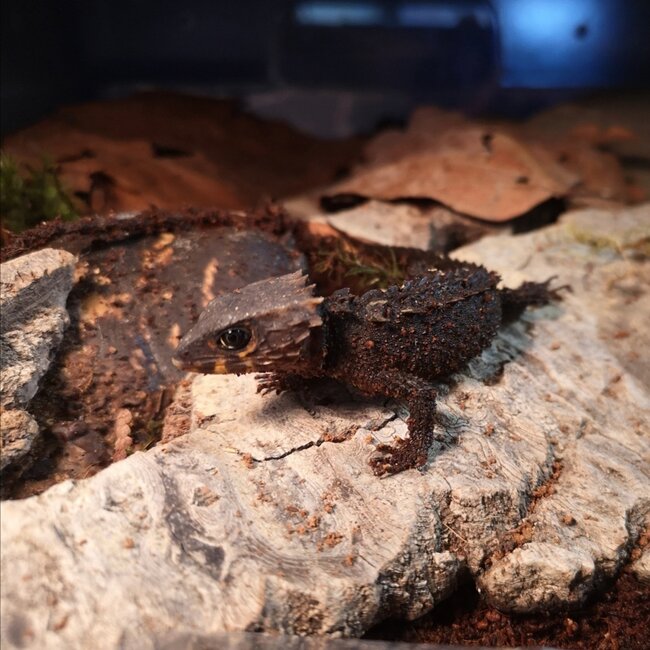
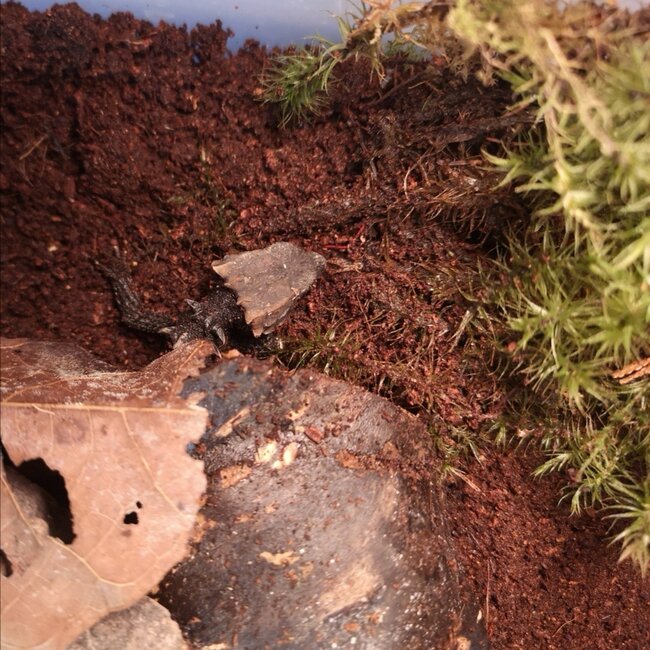
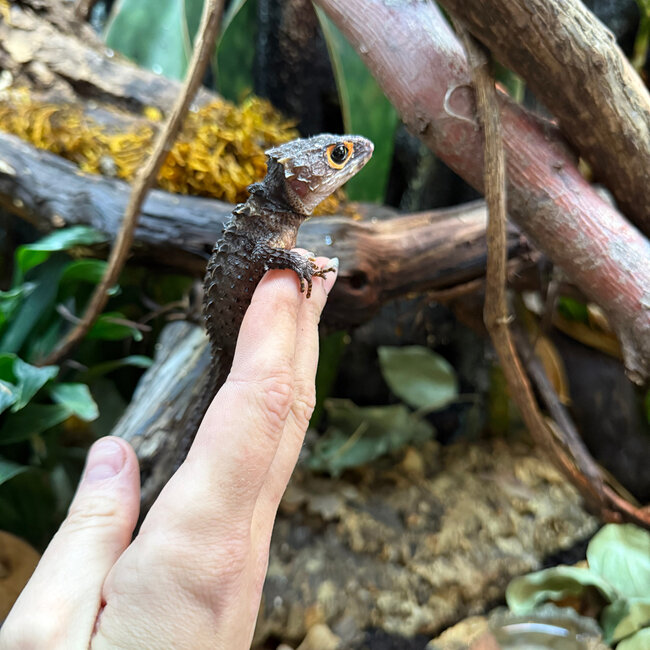
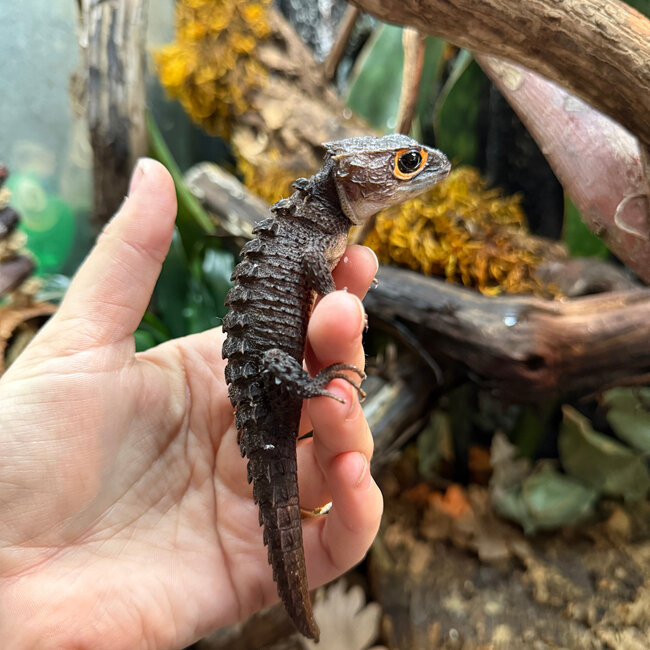
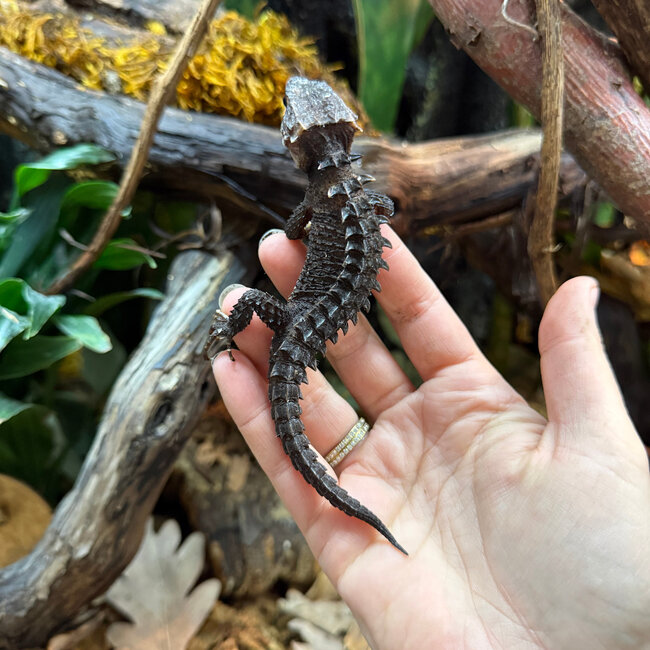
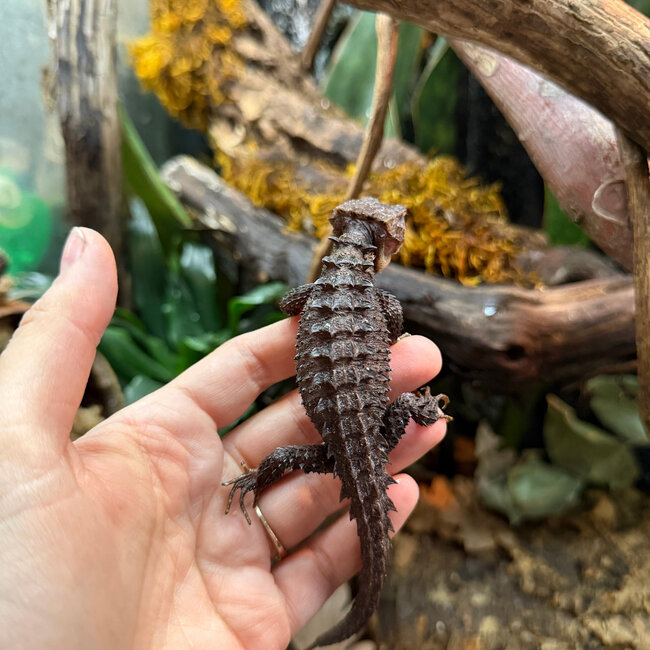
Red Eye Crocodile Skinks
Red Eye Crocodile Skink (Tribolonotus gracilis) See below for additional details and care guide. Read more..
Live Arrival Guaranteed. See terms for full details
We guarantee all the safe arrival of your new pet. See FAQ for full details.Local Delivery or Same Day Pickup
Pick up in store or check out with local deliveryCanada Wide Shipping
Overnight shipping for all live animalsEdmonton's Largest Selection
We are Edmonton's only reptile specialty store with the largest selection of live reptiles!
Product description
Not captive bred.
RED-EYED CROCODILE SKINK CARE SHEET
Tribolonotus gracilis
The Red-Eyed Crocodile Skink is a small terrestrial lizard native to the lowland rainforests of New Guinea. They are primarily nocturnal, secretive, and sensitive to improper husbandry. Their crocodile-like scales, dark coloration, and bright red-orange eye rings make them one of the most distinctive rainforest skinks.
Adult Size: 7–10 in (18–25 cm)
Lifespan: Up to ~10 years
Activity: Crepuscular–nocturnal
Diet: Insectivorous
Temperament: Shy and secretive
Handling: Minimal
ENCLOSURE
Recommended Minimum: 36 × 18 × 18" (90 × 45 × 45 cm) for one adult
Larger enclosures are encouraged. Prioritize floor space and create a dense rainforest-floor environment.
Furnish With
- Deep tropical substrate
- Thick leaf litter
- Live moss and plants
- Cork bark and cork hollows
- Caves and ground-level hides
- Branches and bark pieces
- Multiple shaded areas
Important: Dense cover is essential. A cluttered enclosure helps the skink feel secure and encourages natural exploration.
Cohabitation
Individual housing is recommended for most keepers. If maintaining a breeding pair, provide at least a 36 × 18 × 18" enclosure with abundant hides and closely monitor behaviour.
TEMPERATURE
Crocodile skinks are sensitive to excessive heat. Keep the enclosure relatively cool.
| Zone | Temperature |
|---|---|
| Basking area | 80°F |
| Cool area | 75-78°F |
| Night | 60–75°F |
Use digital probe thermometers to monitor the basking and cool areas. A thermostat is recommended for controlling the heat source.
HUMIDITY
Target: 70–90%
Misting once or twice daily can work well. A cool-mist fogger may be used occasionally at night if additional humidity is needed. Use a USB fan for circulation.
High humidity + good ventilation is essential. Avoid stagnant, constantly saturated conditions.
LIGHTING & UVB
Provide low-level UVB, approximately 6%, using an appropriate linear UVB fixture.
- Provide shaded areas and UVB escape zones.
- Follow the manufacturer's recommended UVB distance.
- Avoid intense or harsh lighting.
- Use a separate plant LED if maintaining live plants.
- Lighting schedule: Approximately 12 hours on / 12 hours off.
UVB bulbs should be replaced according to the manufacturer's recommended replacement schedule.
SUBSTRATE
A deep, moisture-retaining tropical substrate is ideal. The substrate should be moist, not waterlogged.
A deep substrate also provides a natural forest-floor environment and helps maintain stable humidity.
DECOR & ENRICHMENT
Provide plenty of natural cover and hiding opportunities.
Recommended:
- Cork bark
- Cork hollows
- Small caves
- Leaf litter
- Moss
- Live tropical plants
- Branches
- Bark pieces
Moss and dense foliage are particularly useful for creating the cool, shaded microhabitats this species prefers.
DIET
Red-Eyed Crocodile Skinks are insectivores and should receive a varied diet.
Suitable Feeders
- Crickets
- Discoid roaches
- Black soldier fly larvae
- Earthworms
- Mealworms
- Hornworms
- Silkworms
- Snails
Juveniles: Daily
Adults: Every other day
Offer an appropriate amount that can be consumed within a short feeding period, rather than leaving excessive numbers of insects loose in the enclosure.
WATER
Provide a sunken water dish that allows for soaking.
BEHAVIOUR
Red-Eyed Crocodile Skinks are naturally:
- Shy
- Secretive
- Quiet
- Crepuscular/nocturnal
They commonly remain hidden during the day and become more active during the evening and night.
When threatened, they may:
- Freeze
- Flee
- Hide
- Vocalize
- Play dead
These are normal defensive responses.
HANDLING
Minimal handling is recommended.
This species generally does not tolerate frequent handling and is best kept as an observation animal.
Handle only when necessary, such as for:
- Veterinary care
- Health checks
- Enclosure maintenance
Avoid chasing or repeatedly pulling the skink from its hiding places.
Care information available https://reptilesmagazine.com/red-eyed-crocodile-skink-care-and-information/
Specifications
Red Eye Crocodile Skinks
0 reviewsReview Red Eye Crocodile Skinks
Red Eye Crocodile Skink (Tribolonotus gracilis) See below for additional details and care guide.

